Friday, December 9, 2016

how to burst a bubble

The past election season made me painfully aware of Americans’ collective inability to actually listen to folks we disagree with. I say we because I’m not immune—every time I “unfollow,” “unfriend,” or pick the cable news channel of my leaning, I fortify my “bubble.”

This bubble effect not only produced mass shock on November 8th, but has characterized the political gridlock that now seems so commonplace in Washington. A contributing factor, I’d wager, is our misdirected discourse. We speak different languages on opposite sides of the aisle and usually fail to make our messages palatable to the other side or concede anything short of our full agenda. 
       One example concerns a hot-button issue in this year’s election: immigration—more specifically, refugee resettlement. One side uses a mixture of reason and fear to argue that all resettlement should be halted until…[fill in the blank]. The other side appeals emotionally about the victimhood of refugees, but also casts plenty of stones at the perceived xenophobia of the first side. If we learned to communicate on the same wavelength, I think we could take a few small steps toward progress. 
       This message is mainly for my fellow progressives: If you really care about refugees, learn to speak Republican. There’s common ground to be found with a little empathy.
       Historically speaking, the conservative perspective concerning immigration has generally focused on three things: families, economics, and safety. The US has tended to favor immigrants who are a part of a family (the 1965 Immigration and Nationality Act eliminated the country of origin quota system and gave entry preference to immediate family members), who work hard (Reagan’s ’86 legislation granted legal status to unauthorized laborers who had been working for at least 90 days), and who pose no danger (remember Japanese internment camps?). When talking to your conservative friends about immigration, these are three areas you’ll want to mention!
       Let’s start with security. First of all, even GOP stances on national security and the threat posed by outsiders have shifted wildly in the last 30 years. See this video comparing immigration views of Republican primary frontrunners in 1980 and 2016.
       A common concern is that refugees (especially from the middle east) are being hurried through the screening process and insufficiently patted down for criminal histories or ties to terrorism. This is where many conservatives use reason over emotion, or as the Alabama Governor put it, “My heart tells me to let these people in, but my head tells me I must protect the people of Alabama.” Progressives appreciate security too and should meet this type of rhetoric not with dismissal, but with reason of their own. You can familiarize yourself with the vetting process here.
       The other way progressives can appeal to conservatives is by talking money and values. Syrian refugees (the group most scrutinized right now) are more educated than the average American, with nearly 20% having a graduate degree. These are potential entrepreneurs, researchers, doctors, and professionals. This web page from USCRI (US Committee for Refugees and Immigrants) showcases the economic benefits of settling refugees, including work ethic, retention, loyalty, family focus, paying taxes, spending locally, trade skills, diversity, and language skills.
       I think we have more in common than we realize. I just need to pop my bubble every once in a while to see it. I hope you’ll join me.
-->

Monday, December 8, 2014

an Epiphany epiphany

This morning I helped decorate my parents' house for Christmas. I sipped my Folgers and put on the obligatory Mariah Carey Holiday Pandora station (I'll be darned if you can listen to "All I Want for Christmas is You" and refrain from dancing around your living room alone). 

I opened a cardboard box containing a small wooden nativity set and a plastic, light-up Star of Bethlehem. Illuminated by the star which I had plugged in, I began to arrange the whittled characters. 

Usually in these nativity scenes we see baby Jesus and the proud new parents at center stage, with the shepherds flanking one side, and the wise men kneeling at the other. But for whatever reason, as I placed the birch figurines on the table, I felt compelled to intermingle the gift-bearing rulers and staff-wielding herdsmen.

Many have read Luke's account of Jesus’s birth and how it invited and equalized the lowly shepherds and noble wise men. But what if it did more than that? 

What if under the light of that star, the shepherds and wise men knelt hand-in-hand to give thanks and pray for each other? What if the two parties walked away from the manger together, broke bread, and shared stories? What if that evening's encounter forever changed their vertical relation to God AND their horizontal relation to their fellow man?

This year—perhaps more than any year I’ve experienced before—we’re in desperate need of the unity and solidarity that this season can bring. I hope that the celebration of Christ’s coming causes us to kneel and reflect, AND that it compels us to stand up and act. I pray that we "quake at the sight of love's pure light" AND that we join in song to declare that "in His name all oppression shall cease."

I'm so thankful that in the brilliant light of God's love, we're all the same. AND I long for that realization to not be the end, but the beginning of the story. 

Sunday, February 17, 2013

if you can make it here, you can make it anywhere

A couple weeks ago, I felt the familiar disposition to get out of New York City for a while. I stashed my passport and a hundred bucks into an envelope, loaded my backpack with a book and a change of clothes, and hopped a northbound Amtrak for Montreal.

We crossed the Canadian border just before nightfall and I bid adieu to the hectic existence I had come to know while a serene Quebec sunset quietly silhouetted fleeting silos in a barren landscape.

When I checked in at the hostel, the clerk couldn't believe I had come to Montreal to "get away." I suppose most of the people he encounters come to the city to party or sight see. But when you live in a place like Manhattan, Montreal is a perfectly acceptable destination for a quiet weekend escape.

He pointed me to the nearest coffee shop where I enjoyed a steaming cup of joe and breathed in the relative peace that Canada so graciously offered. But despite my best efforts to spend a three-day weekend completely removed from even the thought of New York City, I often found my mind drifting that way.

It first began when I wandered down into a Montreal subway station to ask the attendant how to get to the Quartier Latin. He handed me a colorful, pocket-sized subway map that clearly marked the city's three subway lines. After mastering the Big Apple's sprawling, interconnected nebulous of underground tunnels, I wasn't too worried about finding my way around Montreal (even if I couldn't interpret most of its foreign signs).

After lunch the next day I had plans to meet my friend Alexandre for coffee, so I asked the waitress for walking directions to Mount Royal Avenue. "You want to walk?" she clarified doubtingly. "It's a really long walk," she warned, "Probably thirty minutes."

"Thirty minutes!?" I sarcastically thought to myself as I pulled my cap on tight over my ears and bounded toward Mount Royal Avenue. "I'm a New Yorker; I walk everywhere."

Later that afternoon, after coffee and a stroll in the park, I was chatting with a friendly park ranger named Andre. Andre asked me where I was staying while in Montreal and I told him the Latin Quarter. "Oh that's a nice place," he said as his smile relaxed and he leaned closer, "Just be careful after dark--there are lots of homeless."

"I'll do that," I assured my new Canadian ami, though I really felt like saying, "Please...I live in Harlem...this place feels like Midtown to me."

Lately I've found a lot of resonance in the classic Sinatra lyric, "If I can make it there (New York), I'll make it anywhere."

There's no doubt that New York can be a tough place to live. But an uncomfortable setting can forge an enduring character and I know that I'm stronger because of my experiences here. How is your environment challenging you to be a better character?


Saturday, June 9, 2012

smile because it happened

Immense doesn't begin to describe the range of emotions I've felt over the past few days. After completing one of the toughest, yet most formational experiences of my life and leaving a city that has become home and friends that have become family, I'm emotionally exhausted.

Me and the roomies at Coney Island
Bittersweet doesn't really capture my mood either--there isn't much sweet about it.

But at a time like this, a familiar saying comes to mind: "Don't cry because it's over; smile because it happened." 

I've been smiling a lot recently.

There's the ear-to-ear smile brought about by uncontrollable laughter and sheer exuberation.

There's also the teary-eyed kind that, despite the look of it, comes from a deep sense of satisfaction and profound accomplishment.
Best team ever. No question.

And of course there's the kind of smile that I've found myself wearing most often in recent weeks. It's almost a one-sided grin with a sparkle in the eyes. It's the one belonging to someone who knows something that you don't. Someone who's completely content and supremely at peace. Someone whose thoughts and experiences can't quite be put into words or onto paper, but whose memories are rich. Memories which won't fade.

The memories are all I could ask for. I smile.


Tuesday, June 5, 2012

from heartbreak to hope

A week ago, today, a tragic event shook the school where I work and the community where I live. One of our 5th graders named Joel took his own life. You can read the story here


I was in the room with the other 5th graders when our principal broke the sad news. I watched them wipe their tears and write goodbye letters to their friend Joel. I didn't know him well, but all signs say he was a smiley, happy kid, as any 5th grader should be.

Our school community is still figuring out how to cope with this awful situation and it has stirred my pensive mind. Was there more I could have done? Are there more Joels out there that I can reach?

It's hard for me to imagine what drives a 12-year-old to believe that no life at all is better than the one they have, but I suspect that it starts with one little misfortune, frustration, or bad day--then another and another.

My heart grieves thinking about this, but I know that the opposite is true, too: it takes just one smile, one high five, or one short conversation to give someone hope.

Through Joel's tragedy, hope is blossoming.

In the past week I've cherished my time more, held my students a little tighter, and reached deep to find energy when I thought I had given all I had.

In the past week I've seen a community come together and support each other the way that it should.

And in the past week I've seen students rethink the ramifications of what seems like innocent bullying--a conversation that I pray will continue.

A Coldplay lyric comes to my mind at a time like this: "Every siren is a symphony and every tear's a waterfall."  

We're all connected. Our pain is collective and our burdens are shared. We have the capacity to affect each other in ways we don't realize. We can choose to tear each other down or we can decide to build one another up. God, help us choose the latter. Let us see the divine in each person we pass. Let us see each other as brothers and sisters.


Sunday, March 25, 2012

trayvon martin is why i go to church

Yesterday afternoon, as I was opening the refrigerator to find something to drink, my roommate Esteban abruptly asked me, "Nate, why do you go to church?" Hmm...bit of a strange question, I thought to myself as I searched for an answer and a bottle of water.

"Well, I guess it's because it helps me stay focused on my faith," I responded half-heartedly. Growing up in the Bible Belt, I learned from an early age how to respond to theologically-complex conundrums like the trinity or original sin, but this simple query caught me on my heels.

Why do I go to church? I began to ponder.

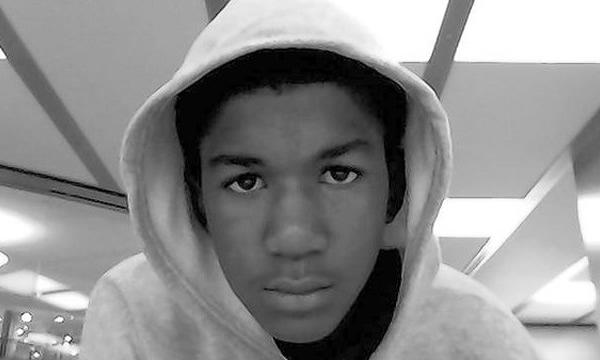
This morning I went to Metro Hope Church, here in my neighborhood, East Harlem. Most people in the congregation were wearing hoodies in support of Trayvon Martin, the black teen who was gunned down last month while walking home from his friend's house in a gated community in Florida. Trayvon's killer was never arrested and currently faces no charges (as of February, 2012; Zimmerman was later arrested).

Wearing our hoodies, we had a time of prayer and reflection. We asked God for justice, healing, and reconciliation. We confessed our shortcomings and prayed that God would remove our deep-seated prejudices. We prayed that the church (the followers of Jesus) would be the institution that leads the charge in confronting racism and hatred.

In that moment I was reminded of why I go to church.

We live in a broken world, marred by unclean hands and hearts. The sad truth is that the natural human tendency is to hurt rather than to help. The injustices we see in our neighborhoods and in our homes are a result of that flaw. I believe that God's love is the answer--the only force strong enough to overcome human hatred.

As long as there is hatred in the world, I want to be on the side of love. As long as there are hurting people in my neighborhood, I want to be a part of the cure. Trayvon Martin is why I go to church. Injustice is why I go to church. I go to church because, when my own love runs empty, it's the only place where I can be refilled with an abundant source of life-giving, world-changing love.

Sunday, January 8, 2012

MLK Day: leave a legacy of service

This is an op-ed I was asked to write for City Year's upcoming MLK Day of service. These opinions are mine and not necessarily affiliated with City Year.
 
“Everybody can be great because everybody can serve.” I doubt this is the first time you’ve read these famous words of Dr. Martin Luther King Jr. and I know I’m not the first service-based non-profit volunteer to quote the revered activist whose life we commemorate on Monday, January 16th.

But even if King’s words have been belabored to the point of redundancy, we can never overemphasize his simple message: service equals greatness. This is why I choose to spend MLK Day by serving in East Harlem with City Year New York.

As a tutor and mentor at PS/MS 57 in East Harlem, I often find myself telling the students I work with that they can do something great with their lives. That’s not just something I say lightly; these kids are truly special.

Jalen is one of the fifth graders in our after school program. He is a great athlete. Sometimes at recess we play basketball together and of course I have to let his classmates score on me every once in a while. But when it’s just me against Jalen, there are no deliberate bricks; I try my hardest and he still beats me.

Tony is another of the gifted students I work with. He has a great mind. When his fourth grade class was studying haikus, most other kids were stuck counting syllables on their fingers while Tony was analyzing the poet’s word choice and conceptualizing ideas like tone and metaphor.

But regardless of athleticism or intellect, I know that every one of my students has the potential to achieve greatness because they each have the ability to serve.

Dr. King, however, would be the first to tell you that true service involves more than just ability; it requires a “heart full of grace,” as he put it, and a “soul generated by love.” When we’re able to serve others with no personal agenda, we are exhibiting the truest sense of love and what it means to be human.

Unfortunately, it’s harder to teach a fourth grader “a heart full of grace” than it is multiplication tables. And “a soul generated by love” doesn’t come as easily to middle school students as does subject-verb agreement. But if there’s one lesson I hope to teach—or better yet, to learn—during my year of service with City Year, it’s that being a servant is the greatest thing you can ever do.

Exactly two months before his death, Martin Luther King concluded his famous Drum Major Instinct speech by envisioning the eulogy at his own funeral:

[Don’t] mention that I have a Nobel Peace Prize—that isn’t important. Tell them not to mention where I went to school [or] that I have three or four hundred other awards—that’s not important. I'd like somebody to mention that day that Martin Luther King Jr. tried to give his life serving others.

January 16th, 2012 is your chance to carry on King’s legacy of service and to begin your own. For many, MLK Day has become “a day on, not a day off.” City Year New York, alongside community volunteers and corporate sponsors, will spend the day building bookshelves, constructing planter boxes, and painting murals for several East Harlem schools and organizations.

Indeed it’s true: everybody can be great because everybody can serve. But we don’t do service because we want to be considered great; service is never a selfish thing. We don’t do service just to bolster our resumes or to be quoted in newspapers. We serve because it’s what makes us human.

Tuesday, January 3, 2012

the 8,401st day of my life

I recently heard someone say, "I count the days because I want to make them count."

Today (January 3rd, 2012) is the 8,401st day of my life. I sit here with my fingers resting on the keyboard and wonder to myself if those 8,401 days have really counted for much. If I'm perfectly honest with myself, I know that many of those days could have been a lot more productive. 

The older I get, the more I realize the value of time. Until now, I never fully understood the old saying "there just isn't enough time in the day." In fact, I think time is more valuable than money, and being the frugal person that I am, I wonder what my days could look like if I spent my time as carefully as I did my money. Even with a job that requires 50+ hours a week, I know there are ways I can be more efficient with my time.

Knowing that this is the 8,401st day of my life, you could (assuming you had the time, an understanding of some basic math, and the knowledge that I was born the year after a leap year) conclude that today is my birthday. With my date of birth falling so close to New Years, my resolution has special significance because what I do in 2012 will also be what characterizes me as a 23-year-old.

3rd Avenue from my rooftop.
In this, my 24th year of life, I want to be able to slow down and enjoy more of life's simple pleasures. For me that means coffee, sunsets, reading, writing, playing guitar, good conversations with friends. I want 2012 to count, so for the next 363 days I'm going to be more intentional about how I spend my most precious commodity: time.

Monday, December 26, 2011

laguardia prose

12-16-11: Day 134 in NYC

I hate to leave The Big Apple this time of year--all dressed up in its holiday best. The city's Christmas spirit is apparent on the faces of its newest tourists sauntering past me in the terminal--trailing suitcases like leashed Terriers. No one carries their luggage these days.

Anxiously awaiting my RDU-bound airplane, I'm sipping a WorldBean coffee from Durham, NC. My destination's java precedes me. My mood is chill. I'm very excited to be bound for the Old North State, but it's a somber feeling to think about not seeing my City Year teammates for over two weeks. I'm so glad (and thankful and blessed) to be on a team, where halfway through the year, I'm actually going to miss the people that I spend so much time with in a given week.

I regret not doing more Christmasy things here like window shopping on 5th Avenue. I missed the Macy's parade and I won't get to see the ball drop at New Years either. I hate to miss these festivities, but there's no place like home for the holidays and I wouldn't want to be anywhere but NC this time of year. If I die in Raleigh, at least I will die free!

Sunday, December 25, 2011

easy like sunday morning

So I realize I haven't been the most diligent blogger since starting this account over two years ago. Because I often seek the profound in life, I usually hesitate to publish anything that isn't. But profound thoughts can easily come across pretension and I wouldn't want that, so I'm going to try to start thinking less and writing more.

Since moving to New York in August, I've been journaling as often as possible. This post is from an entry I wrote several Sundays ago...

12-4-11: Day 122 in NYC

I love Sunday mornings in NY. Actually I love Sunday mornings anywhere, but especially in NY. Monday through Friday are just too busy to really be enjoyed and when it comes to weekends, I think Sunday is superior because Saturday is often filled with rushing people fulfilling duties neglected during the previous workweek. Plus, Saturdays, for me, usually come with the temptation to sleep until noon, lounge in my pajamas with Cap'n Crunch in hand, and otherwise waste an entire day.

Santa flannel with roomies Esteban, Kunal, and Jake.
This Sunday morning I find myself in my usual spot: Starbucks at 78th and Lexington. The spirit of Christmas is in the air. I'm sipping on a Christmas Blend drip coffee and wearing a red flannel shirt that looks like something Santa Claus might sleep in. I can see him as he lazily rolls out of bed, late in the afternoon of the 25th, to the smell of gingerbread and sausage that Mrs. Claus is merrily preparing in the kitchen. His body aches from a night of work like no one else could know, but he loves his job.

There's a Christmas tree stand by my apartment that opens my nostrils and makes me smile each time I pass. On the way to the train this morning I stopped by and shot the breeze with Alex--one of the guys that runs the stand. He's a young bearded fellow that looks like he works on a Christmas tree farm. He encouraged me to try organic farming after my time in NY is done. Maybe I will.

Rockacenter with Jessica, Denise, Esteban, Dixie, and Tania
The Christmas tree stand is right next to this little taqueria with two-dollar tacos. That block is an olfactory paradise. The taco stand's exotic smells perforate the brisk air with scents of cayenne pepper and cilantro while freshly-made corn tortillas sizzle on a propane-powered skillet. I always make it a point to walk up 3rd Avenue on that side of the street.

So now Sunday morning has faded into Sunday afternoon and I'm reminded of all the things I need to do before another long week. This was a nice respite, though. Hopefully I can be productive today and find some time to enjoy it. I guess that's what I strive for everyday, really--to do something meaningful, but never at the expense of enjoying life.

Sunday, June 19, 2011

time is just a melody

I like to blog on airplanes.

I could tell you it’s to pass the time or to record the memories of my trip, but honestly it’s because I like to look scholarly and sophisticated. An airplane is a good place to look scholarly and sophisticated.

Sometimes on airplanes I read big books of poetry and ask the flight attendant for a glass of tomAHto juice with a fake British accent (not really, but you get the picture).

Anyway, this isn’t a blog about sophistication or any pretense of it; this is a blog about time.

Time’s a funny thing and I often find myself thinking about it on airplanes (when I’m not reading Byron). Probably because airplanes are about the closest things we have to time machines. You encapsulate yourself in a flying tube, zoom through the stratosphere, and wind up in a completely different environment and time zone.

This morning from my bedroom window, I watched as the sun crept up NC’s eastern horizon. This evening I saw the Pacific extinguish that same ball of fire over Oahu’s western shore. Before watches and cell phones, the sun was the only way to tell the time. I think I’d like it that way; then I could use phrases like “high noon.”

I learned in college about how different cultures perceive the concept of time. Some cultures, like many of those in North America and Europe, view time rather strictly; it’s what keeps everything flowing orderly and efficiently. Other cultures place much less importance on chronology and tend to live more in the moment.

Hawaii is one of the few places in the US where you find that second mentality; where people slow down and enjoy the sunset; where nothing is too pressing or important to keep you from saying hi to your neighbor.

It’s all about priorities, really. I think when we stop worrying so much about time we’re actually able to do more with it. In the end, that’s really all we can do with our time: use it. We cannot kill time and we cannot save time. All we can do is use our time, or, of course, waste it.

We can’t create a better world until we start living better lives and we can’t do that until we learn to appreciate the time we've been given.

The real question is what will you do with your time? Things that matter? Things that impact people’s lives? Things that create positive change? Or things that don’t? Whatever you decide to do with your time, take a second to slow down and enjoy it.


Now enjoy one of the island's own:


Wednesday, December 22, 2010

open thou mine eyes

Last week I was part of a group of Campbell students that ventured to St. Louis for a week of service. As we braved the Midwest’s icy roads and negative wind chills, I somehow hoped that our team’s presence in St. Louis could make the city a warmer place.

What I didn’t necessarily expect was to be warmed by the city as much as I was—even if it required a few cold realizations.

On our first morning at the Christian Activities Center (CAC) in East St. Louis, Illinois (across the Mississippi from Missouri), Drew, Campbell alum and CAC chaplain, gave us a brief history lesson on East St. Louis.

Because I would probably get more kicks out of retelling the history than you would in hearing it (I’m a bit of a history geek), I’ll just sum it up for you.

Nearly a century of race riots, unemployment, “white flight,” and underfunding has left East St. Louis (ESL) one of the poorest areas in the United States.

Drew’s hope for our team that week was that we would experience life in ESL and go home “messed up” with a desire to mend similar situations in our own lives.

I’m usually a little skeptical of short-term mission trips. From what I’ve seen, “self–inflation” tends to be the more common result of such trips than is genuine change. But like Drew said, when a difficult situation can open your eyes to things previously unseen, the impact can last much longer than a week.

Before starting work at the CAC one afternoon, one of the young girls from the neighborhood led us in a prayer. After thanking God for her family and friends, the girl prayed, “be with our enemies and help us come together.”

We are commanded to pray for our enemies in one of Jesus’ most well known sermons, yet we as a church so seldom actually do it. But here in one of the most underprivileged areas of the country is a 12-year old girl—who probably has more reason to have enemies than I do—doing what millions who share her faith regularly fail to do.

That simple prayer really humbled me.

Among the other things that inspired me last week were some of the individuals on our own mission team. Every one of the 16 people from our group was so eager to serve, but perhaps none more than my friend Amber.

Amber was diagnosed with a rare type of cancer when she was in middle school. After attempting several treatment options, doctors determined that amputating her left leg would be the best course of action. Despite her seemingly disadvantageous position, Amber was absolutely the most optimistic, happy, and carefree person on our team.

It would be easy for people like Amber or James (another member of our team who is deaf) to adopt a self-centered attitude and let their circumstances keep them from serving others. But, no, they each had an indomitable spirit and loved those around them the best way they knew how. This attitude was contagious. Each morning, friends like these face the new day by giving all that they have; that is more than I can usually say.

These new friends have truly inspired me.

Several more eye-opening experiences would occur, but Thursday morning inevitably rolled around and it was time for us to head home. We packed our bags, headed east, and watched the Gateway Arch fade in the rear-view mirror. St. Louis really wasn’t any different of a city because of 16 college students who served there for a week.

But for at least one college student, the world now has a slightly brighter hue. Love now seems a little warmer, prayer, a little more vital, community, a little more important, and the gospel, a little more vivid.

The mission field has taught me far more than I could have ever hoped to teach.

God, let these experiences and those to come lead me to a fuller understanding of you and your love. Oh yeah, and be with my enemies so we can come together.


Thursday, June 17, 2010

a beautiful game, a simple concept.

Some call it soccer. Others call it football. Some have christened it the “Beautiful Game.”

Whatever you call it, one thing is undeniable: this game has power.

And I don’t just mean a physical kind of power; one that can cause the ball, from a perfectly-struck free kick, to spin and dip as it sails beyond the outstretched fingers of the goalkeeper, ducking beneath the crossbar and whipping the back of the net.

No, no. I’m talking about a kind of power that can change the world.

A game? Change the world? How can a game change the world?

Take a moment to watch this clip and you’ll see what I mean.


There may be no one who can better attest to the power of sport than the man who witnessed a game unite his horribly segregated nation in the mid-nineties.

The man was Nelson Mandela, and the nation was the same one where 32 teams are now competing for soccer’s most coveted prize: South Africa.

Those who have seen the movie Invictus know just what I’m talking about. The story is worth repeating, but to avoid any spoilers, I’ll just give you the one-sentence synopsis: a divided nation became one as they rallied behind their national rugby team.

After witnessing this power first-hand, Mandela—who was also influential in South Africa’s bid to host the FIFA World Cup—said the following of the power of sport:
Sport has the power to change the world, the power to inspire, the power to unite people in a way that little else can. It speaks to people in a language they understand. Sport can create hope where there once was despair. It is an instrument for peace, even more powerful than governments in breaking down racial barriers.
Sadly, the country of South Africa still struggles with segregation and racial tension today. Years of forced segregation (apartheid) have cemented certain beliefs in many of the country’s citizens. But if you’ve turned on the tube recently, you have seen white and black supporters standing side-by-side, cheering on their beloved Bafana Bafana.

A simple game is creating unity.

Apart from South Africa’s racial problems, the continent of Africa, as a whole, is experiencing a multitude of crises. Poverty and disease make surviving each day a challenge, the aids pandemic continues to affect an extraordinary percentage of the population, and civil wars fought over race and religion have orphaned children, widowed mothers, and created soldiers of young boys. Yet I can only imagine that the six African nations represented at the World Cup have provided unspeakable relief from these daily discomforts.

A simple game is creating hope.

No country on earth is without its problems. Yet even here in my hometown of Garner, NC, thousands of miles from the current soccer epicenter of South Africa, the game is resonating waves of change. Nightly, white, black, and Hispanic athletes leave their segregated neighborhoods to come to the most colorful place in town: the soccer field.

A simple game is making people look twice.

We have all witnessed the power of this game. But at the end of the day, it’s just that: a game. Football will never attain any supernatural status, and a soccer ball will never be anything more than leather and stitches inflated with air. The real power is within us all.

So if something so simple as a game can build hope and create unity, break us from our stubbornness and hatred, and cause us to rethink our stances on social and racial issues, then maybe our differences aren’t as great as we all once thought.

If you liked this blog, check out these links:

http://sportsillustrated.cnn.com/vault/2010/05/24/105940842/soccer-savior
http://www.nytimes.com/2010/06/02/world/africa/02soweto.html?ref=barry_bearak
http://www.beyondsport.org/download/hJBlairNV.PDF


Friday, May 28, 2010

if we can't live together...

Along with millions across the globe through the past six years, I have been captivated by ABC's hit series Lost. One of the main things about Lost that always kept me coming back for more was my desire to know the answers. What do the numbers mean? What is the hatch and how did it get there? Who are the others? Why is the island so special? Who is Jacob?

The show's six seasons of plane crashes, plot twists, and polar bears finally culminated into one action-packed series finale this past weekend. The finale answered many questions, but, in typical Lost-fashion, left plenty to ponder.

After watching the finale, the obvious questions to be asked are: Is everyone dead? Are they in heaven? Do they have two simultaneous lives taking place? These are questions that I doubt the writers of the show could even answer. I feel like the ending is purposely ambiguous, so each viewer can create his or her own "perfect ending." I won't bore you with my own explanations and theories, but I do hope to briefly explore one of the series' most intriguing and central themes: destiny vs. coincidence.

On September 22, 2004, the day Oceanic flight 815 crashes on an island in the south Pacific, two clashing characters emerge as important figures: the practical Jack Sheppard, a spinal surgeon from LA, and the ethereal John Locke, a man mysteriously healed of his paralysis after the crash. Locke, who is in no hurry to leave, instantly begins to claim that fate has brought them to the island, while Jack desperately mends wounds and searches for rescue.

The duo's disagreement is most bluntly stated in season one when Locke tells Jack, "You are a man of science. I am a man of faith." The irony is when, in the final episode, this dialectic is flipped on its head as the man in Locke's body attempts to break fate, while Jack claims that it is his destiny to save the island and admits that Locke was right about everything.

There are many opinions in the argument of fate vs. coincidence. "People break into two groups when the witness something lucky. Group number one sees it as more than luck, more than coincidence. Group number two sees it as just pure luck, a happy turn of chance" (Signs). I don't know if we each have a destiny or if we're all floating around accidental like on a breeze. I think maybe it's both. Maybe both is happening at the same time" (Forrest Gump).

I am not here to argue one way or the other, or even to take the middle road, I am simply suggesting that perhaps it doesn't matter.

Let me explain myself.

Despite one's beliefs--or lack thereof--and regardless of their motivations, maybe the most sincere thing that any person can do is to act selflessly and love those around them.

In spite of all the head butting between Jack and Locke, didn't both men essentially want the same thing? Think about it. They had different ways of carrying out their ideologies, but besides a few momentary lapses of selfishness, each man wanted nothing more than the physical and emotional well-being of the entire camp. It's like taking two separate roads to get to the same destination.

What I am trying to say is that when a person acts out of pure love for those around him, the only thing he will ever find is peace.

Numerous examples of this selfless love can be found in Lost and most often, they involve death. Now that I think about it, nearly everyone who ever died in the show did so in an attempt to help someone else. Boone dies when trying to radio for help. Charlie drowns after disabling the frequency jam. Locke is killed in his attempt to bring the others back to the island. Sayid sacrifices himself in the submarine. Jin and Sun die hand-in-hand. And finally, Jack dies after restoring the light to the island.

All of these characters had different views of destiny, but each had the same motive. And in their final moments, each displayed the ultimate act of kindness.

And so whether our friends at last found themselves in heaven or a parallel universe, there is no doubt that they were in a place of community, love, and peace.

"This is the place that you have all made together so that you could find one another. The most important part of your life was the time that you spent with these people. That's why all of you are here, nobody does it alone, Jack. You needed all of them and they needed you."

I think it's the same way in real life. When we put the needs of others before our own, we will find ourselves in a place of peace. Either in this life or the next, peace is the product of selflessness and love.

So that's my two cents about one of the greatest series of our lifetimes. I'd love to hear your opinions on this show that we all love. Thanks for reading!


Tuesday, June 30, 2009

patience: the prized virtue

So this is my first blog ever. I'm writing from an American Airlines napkin (well, the draft anyway) on the way to Miami from RDU.

Thanks for taking the time to read this. I apologize if I ramble or my life is just utterly boring. I write not merely for leisure, but for clarity, as I sort things out in my own head. I can offer little wisdom, but I invite you along for the journey where I expect to encounter more questions than answers. Questions though, can often solve far more than answers ever will.

This particular leg of the journey will begin in the metropolis that is Grifton, NC and hopefully lead us over the Gulf of Mexico to Tegucigalpa, Honduras (though I have my doubts we'll ever get there).

So after a meaningful week of mission camp in Eastern NC, our team prepared to cross continents and cultures. Saturday, which was to be our first quasi-day off in a long time, was laid aside for traveling back to Raleigh, doing some laundry, and catching up on some much needed sleep.

After a delectable DBL 1/4 #er w/ cheese (double quarter pounder with cheese), we returned to the stubborn sound of our van's ignition. Blown starter. Luckily, a friend of a friend knew a good mechanic in the area who put new meaning to the term "grease monkey." Yes, he literally resembled a primate.

A couple of hours and a new starter later we were back on the road and bound for Raleigh. While doing laundry back at my home in Garner, Joey and I could not figure out the dryer. It literally took us 2 1/2 hours to dry one load! Thanks to the dryer miscue we didn't get to the hotel that night until 11:00, just in time for about 5 hours of sleep (not much less than the norm).

I had to pinch myself several times to make sure I wasn't having a terrible dream. "Really? Did you just say our flight is delayed 5 hours?!" It wasn't a dream, this setback would mean we would miss our connecting flight in Miami. There was no way around it, we wouldn't be getting to Honduras that day.

The provided food vouchers settled my hunger and the carpeted floor and warm blanket made for a semi-comfortable bed which helped pass the 8-hour airport wait. Perhaps Miami would not be so cruel to us.

These past couple days have taught me a thing or two about patience. Those of you who know me well know that patience is not a virtue of mine. Yet in the constant waiting, delaying, and being in circumstances completely beyond my control, I seem to be finding a peace I haven't felt in a long time. In situations like these, I'm finding the best thing to do is to remain positive; no amount of complaining is ever going to make things any better. I'll spare you the French, but stuff happens. That's life, and the truth is that's where we spend the majority of it: in situations beyond our own control. And if we (myself included) are going to be the people we say we are--portraying generally accepted qualities of peace, happiness, and patience--then mustn't we portray them when we least expect to?

So here I am, writing from my 10th-floor hotel room overlooking the runways at Miami International Airport. This day has been challenging yet rewarding at the same time. Tomorrow morning we will board a plane (fingers crossed) bound for the capital city of Honduras. In a land where time is not much of a concept and things change with the wind, I'm sure today's lesson in flexibility and patience will be of utmost importance.

Thanks for taking the time to read this. Once again, I apologize if I bored you. I hope you can all be blessed in some small way from reading this. If it was a waste of your time, let me know know and I'll stop. Have an awesome day (or night)! God bless.